
Okay, so check this out—
I was poking around Solana tooling last week and noticed somethin’ interesting. The explorer landscape feels noisy, and Solscan stands out for clarity. Its UI loads nearly instantly even on modest, consumer-grade connections. Initially I thought it was just slick design, but then I realized the depth of analytics and instruction-level decoding hiding under that clean surface, and that changed how I approach transaction forensics.
Wow, really impressive stuff.
When tracking a token mint or a failed swap, Solscan shows the instruction sequence. That saves hours compared to sifting through raw logs or making guesses. My instinct said this would be niche, but it’s broadly useful for developers and traders. On one hand it’s a simple lookup tool that anyone can use, though actually it’s more like a lightweight analytics suite that surfaces holder distributions, historical token movements, and validator staking activity without making you be a chain engineer.
Hmm, not perfect though.
Some metrics aren’t as granular as what you’d find on enterprise dashboards. Token holder charts sometimes aggregate spots that I’d rather split for forensic work. Also, compressed NFTs and some novel program types can be displayed oddly. Actually, wait—let me rephrase that, the data is there but you have to know which filters and tabs to use and which on-chain program IDs correspond to the behavior you’re investigating, so there’s a learning curve.
I’m biased, but I like it.
The search bar is forgiving with typos and partial addresses. Paste a tx hash to see instruction breakdowns, account balances, and inner logs. There’s also a transactions tab with sortable fees and success states. Something felt off about fee attributions at first, but after cross-checking signatures and looking at per-instruction compute units it aligned with how Solana accounts for parallelized execution across programs.
Okay, here’s the practical part.
If you’re investigating a failed swap, start with the transaction summary. Then expand instructions and read decoded params for each program call. Initially I thought logs alone would do, but decoding shows which token accounts were touched, which associated token program calls failed, and whether a CPI from a router contract was the culprit, so it’s often decisive. Pro tip: combine holder distribution charts with on-chain transfers to spot coordinated sales or subtle drip distributions, and when something smells like wash trading you’ll usually see patterns that are repeatable across blocks.
Whoa, seriously helpful.
The token page surfaces mint info, supply changes, and top holders in one view. It links to holders and lets you export holder lists for offline analysis. On one hand exporting is straightforward, though actually the CSV column names could be more standardized across token types to avoid mismatches with downstream tooling, so expect a little clean-up. I’m not 100% sure about some staking metric timestamps, which bugs me because epoch timing matters for rewards calculations, but the validator pages still offer a lot of usable telemetry for node operators and delegators.
Okay, one more caveat.
Privacy conscious users should remember that Solana is public by design. Address clusters and token flows can reveal user behavior if you piece things together. On the flip side, I appreciate that Solscan doesn’t try to monetize every analytic, and the balance between free features and premium products (oh, and by the way I checked) feels reasonable for most hobbyists and pros alike. Initially I treated the explorer as a lookup tool, but then realized it doubles as a research sandbox where I can prototype indicators and save myself from making costly misreads during live trades.
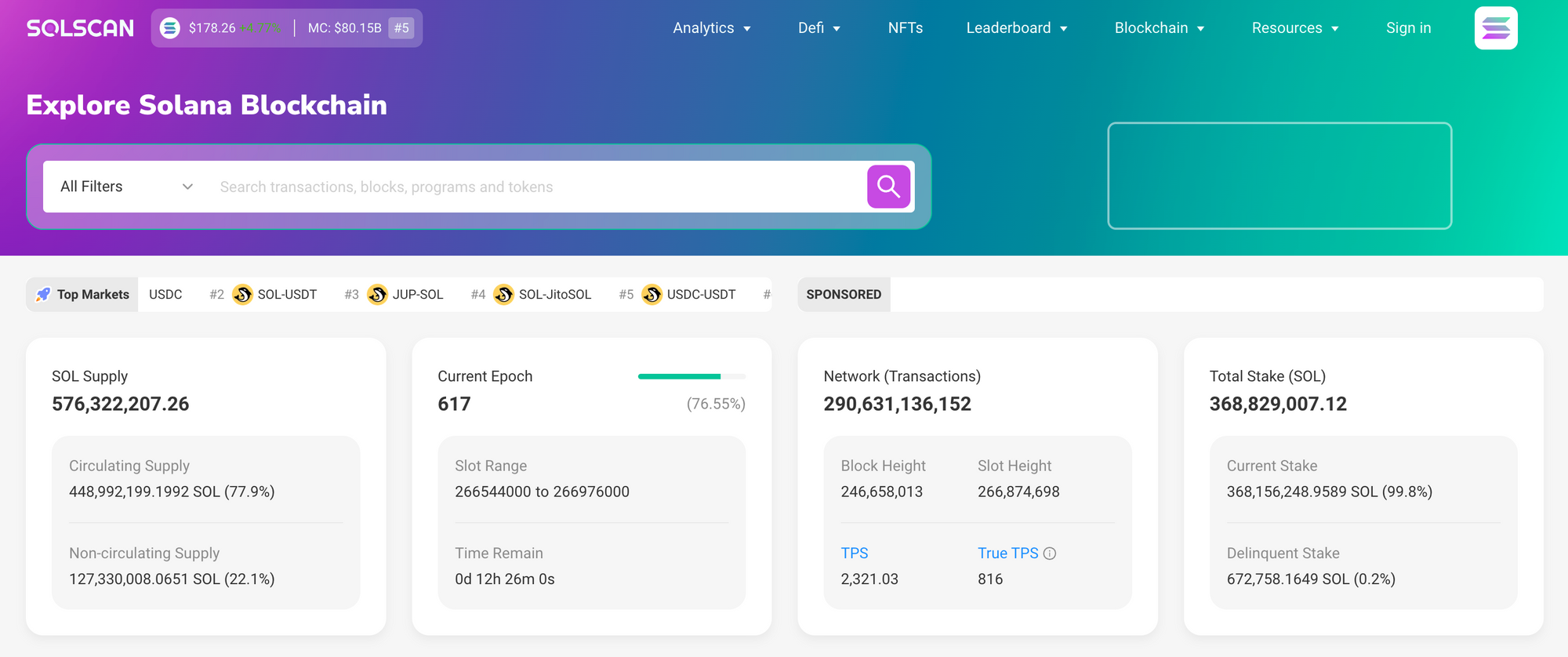
A quick guide to getting the most from Solscan
For direct access to the explorer and its tools, bookmark the solscan explorer official site. Use the search bar first, paste tx hashes second, and then dive into token and account pages for context. Wow, small habits like checking instruction decoding before you assume cause save time and money.
Okay, so a few quick workflows I use every week: when a trade fails I copy the tx, check the instruction list, then cross-reference affected token accounts and mint history. When I research an airdrop I look at holder concentration and recent incoming transfers to identify likely recipients, which helps avoid noisy conclusions. I’m not 100% sure about every edge case, and sometimes somethin’ in the raw logs forces me to reach for on-chain CLI tools, but Solscan gets me 80–90% of the way there fast.
FAQ
How do I decode instructions for a transaction?
Paste the transaction hash into the search box, open the instructions panel, and review the decoded parameters for each program call. If decoding looks off, compare the program IDs to known runtimes and check inner logs for compute-unit details.
Can I export holder lists for analysis?
Yes, use the token page to export holders to CSV, then clean column names if needed for your tooling. It’s handy for whale-tracking and snapshot analysis, though you’ll sometimes need to normalize account formats depending on downstream systems.